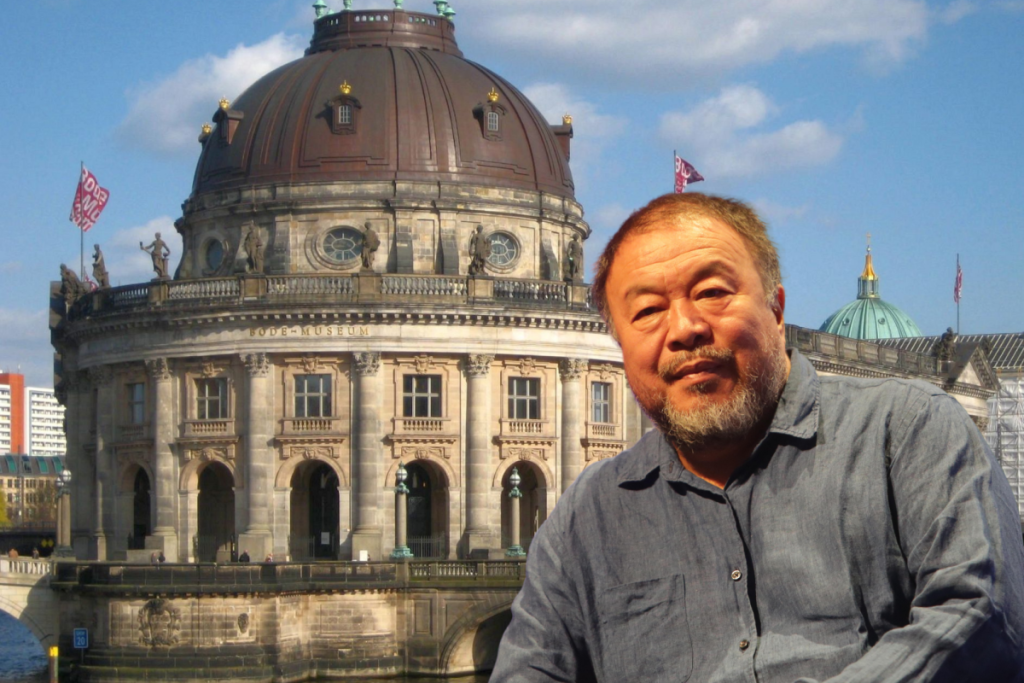

Berlin has many faces. It is a city of arrival, of memory, and sometimes also of farewells. Hardly anyone embodies this tension as clearly as Ai Weiwei. The Chinese artist, who has lived in Europe for years and has found one of his most important artistic homes in Berlin, will turn 70 in 2027. That same year, a major exhibition will open at the Bode Museum, linking his work to the history of the museum.
Ai Weiwei is considered one of Berlin’s most famous residents in exile. He was forced to leave China after being politically persecuted there. This experience recurs time and again in his work: as a question of his own identity, of power, resistance, and the possibility of remaining visible despite it all.
Exile as an Artistic Force

For Ai Weiwei, exile is not merely a biographical fact. It is an artistic principle. Anyone forced to leave behind their homeland, language, and familiar ways of life begins to see the world through different eyes. This is precisely where the power of his art lies. It reveals boundaries that often go unnoticed until one is compelled to cross them.
This perspective fits remarkably well with Berlin. For decades, the city has been a refuge for people who had to leave for political, religious, or artistic reasons. Here, exile signifies not only loss but also a new beginning. It means taking memories with you and renegotiating them in a foreign space. Ai Weiwei does not turn this into an elegiac narrative, but rather into a political and at the same time poetic exploration of belonging and exclusion.
A Museum for the Displaced
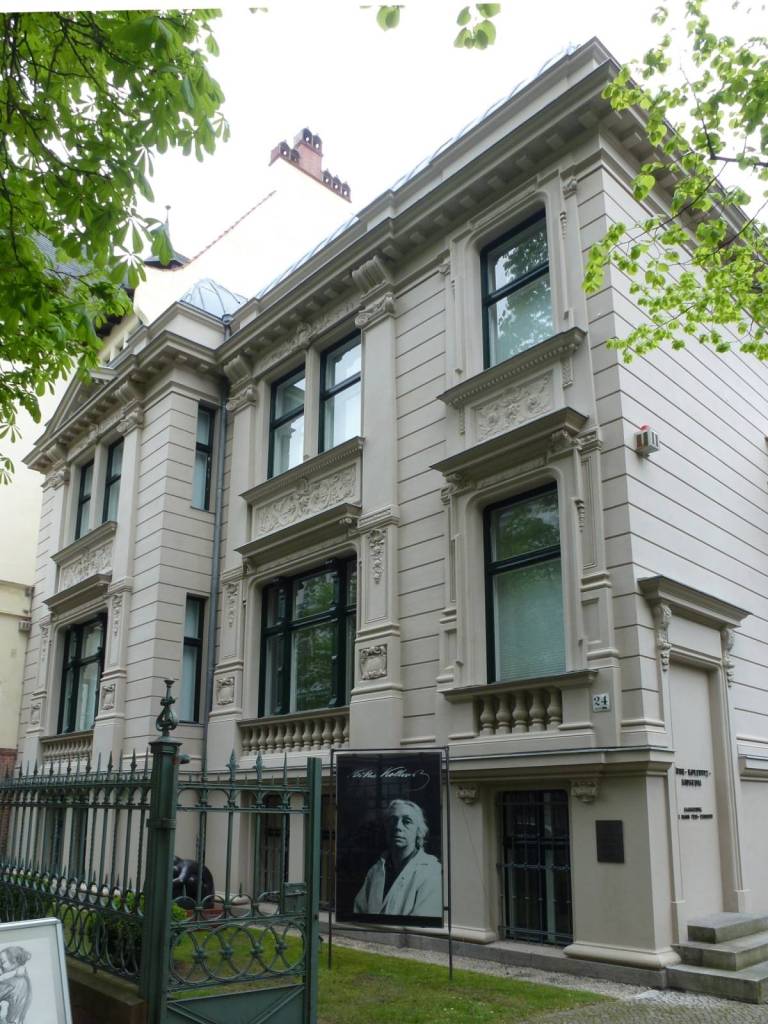
The fact that the topic of exile is so prominent in Berlin right now is also due to the Exile Museum. Originally, a new building was planned at Anhalter Bahnhof. However, due to the high costs, this project was halted. Instead, the museum will now be housed in a historic villa on Fasanenstraße in Charlottenburg-Wilmersdorf. The opening took place on October 1 of this year.
The change of location is more than just an organizational decision. An old villa itself tells a story of ownership, loss, and change. It is precisely there that the Exile Museum can demonstrate that flight and displacement are not closed chapters of the past, but continue to shape the present to this day. Ai Weiwei and the Exile Museum thus become two distinct yet related sites of remembrance in the city.
Berlin Becomes a Stage
The exhibition “Ai Weiwei at the Bode Museum” opens on May 5, 2027, and runs through June 4, 2028. The artist will bring existing and newly created works, as well as objects from his personal collection, into dialogue with more than 2,000 years of art history.
Berlin will thus have a rare opportunity next year: to see an artist who views exile not as fate, but as a source of resistance. And a city that is learning to retell its own history of arrival and departure.