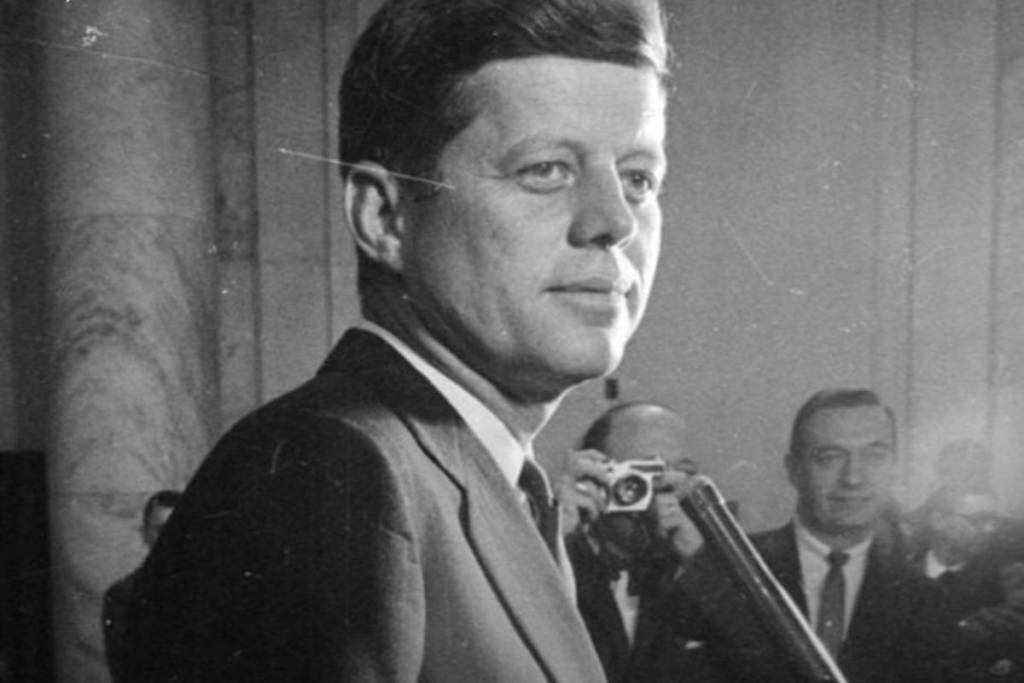

Berlin has time and again been the setting for unforgettable moments involving international celebrities. While Michael Jackson made headlines worldwide in 2002 with his controversial balcony performance at the Hotel Adlon, John F. Kennedy made history as early as 1963 with just four words. In front of hundreds of thousands of people at Schöneberg City Hall, the then-U.S. president declared, “Ich bin ein Berliner” (“I am a Berliner”), thereby sending a message of solidarity with the divided city. Yet a curious myth still surrounds his famous statement to this day: Did Kennedy actually accidentally refer to himself as a pancake?
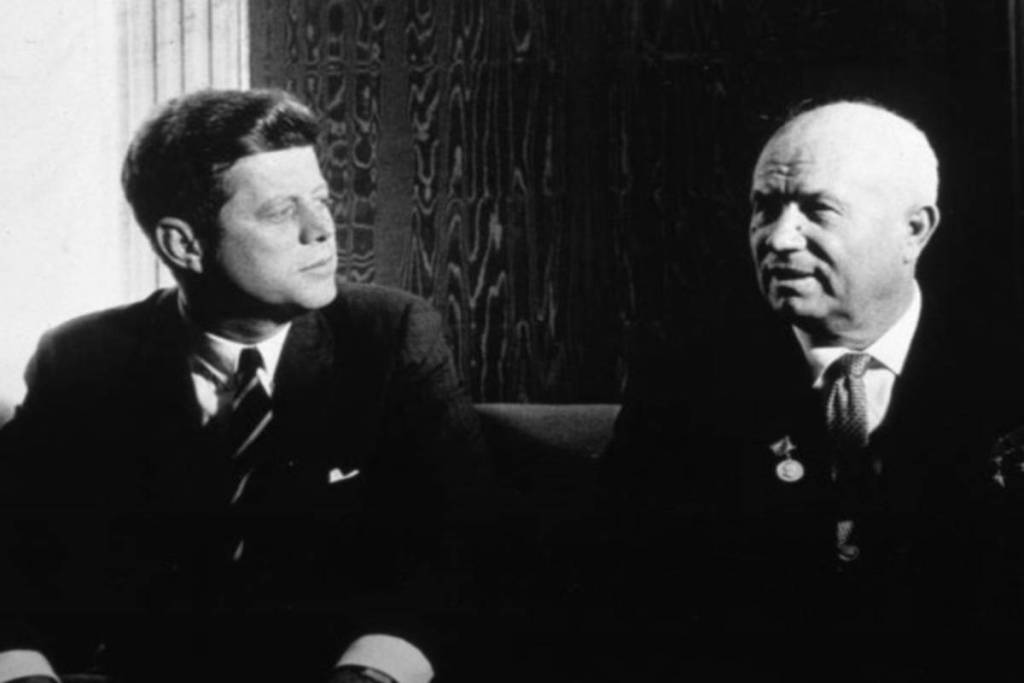
On June 26, 1963, U.S. President John F. Kennedy delivered one of the most famous speeches of the Cold War in front of some 450,000 people at Schöneberg City Hall. With the words “Ich bin ein Berliner,” he expressed his solidarity with the people of divided Berlin. But decades later, a curious story began to circulate: that due to a slip of the tongue, Kennedy had referred not to himself as a citizen of Berlin, but as a jam-filled pastry. In fact, this is a myth that continues to be repeated to this day.
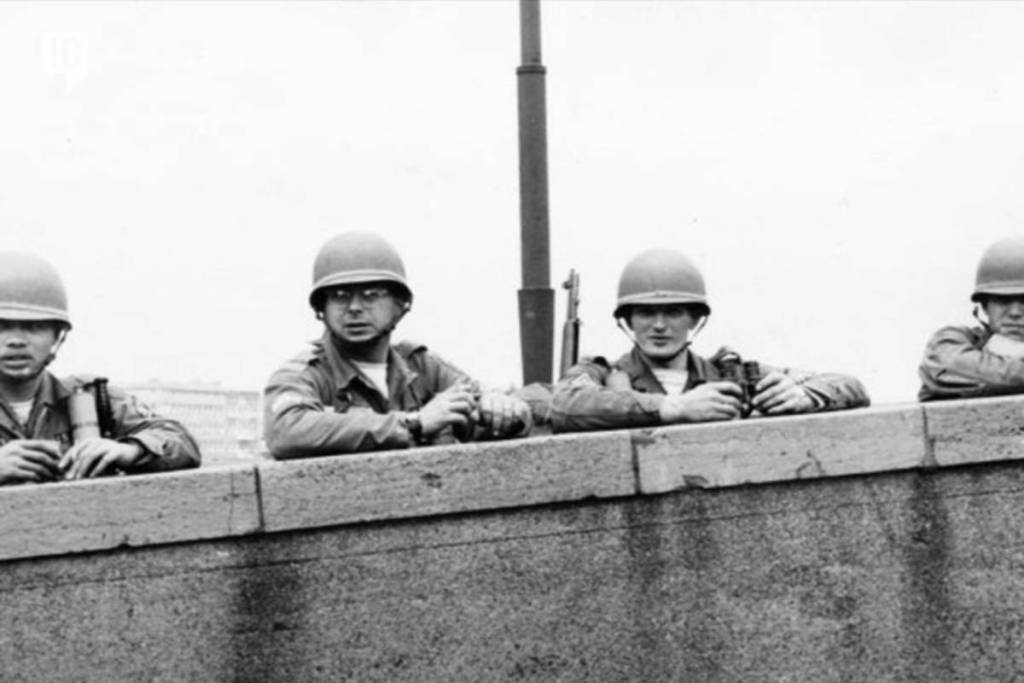
Just under two years after the Berlin Wall was built, Kennedy visited West Berlin to reaffirm the United States’ support for the encircled city. The political situation was tense, as West Berlin was completely surrounded by East German territory. Together with Governing Mayor Willy Brandt and Federal Chancellor Konrad Adenauer, Kennedy addressed a huge crowd at Schöneberg City Hall.
His speech was intended to encourage West Berliners and make it clear that the U.S. stood by their side. The phrase “Ich bin ein Berliner” became the emotional highlight of his visit and went down in history as a symbol of freedom and international solidarity.
The story stems from a linguistic ambiguity. In many parts of Germany, the word “Berliner” refers to a round, jam-filled yeast pastry. In Berlin itself, however, this dessert is traditionally called a “Pfannkuchen.” According to legend, Kennedy should therefore have said “Ich bin Berliner” instead of “Ich bin ein Berliner.” By adding the article “ein,” he allegedly referred to himself as a pastry.
What’s particularly interesting is that the alleged slip of the tongue during Kennedy’s speech wasn’t an issue at all. The audience understood his words correctly and responded with enthusiastic applause. Kennedy had even practiced the German phrase beforehand with German-speaking translator Robert Lochner. It wasn’t until years later that the misinterpretation took hold. A 1988 article in The New York Times, which picked up the story under the headline “I Am a Jelly-Filled Doughnut,” played a decisive role in this. As a result, the myth gained widespread recognition, particularly in the English-speaking world.
Kennedy’s visit was one of the most emotional moments in Berlin’s postwar history. Around two million people lined the streets of West Berlin during his stay. Just a few months after his historic speech, the U.S. president was assassinated in Dallas on November 22, 1963. The square in front of Schöneberg City Hall, then known as Rudolph-Wilde-Platz, was renamed John-F.-Kennedy-Platz after his death. To this day, the site serves as a reminder of his historic appearance and the special bond between Berlin and the United States.