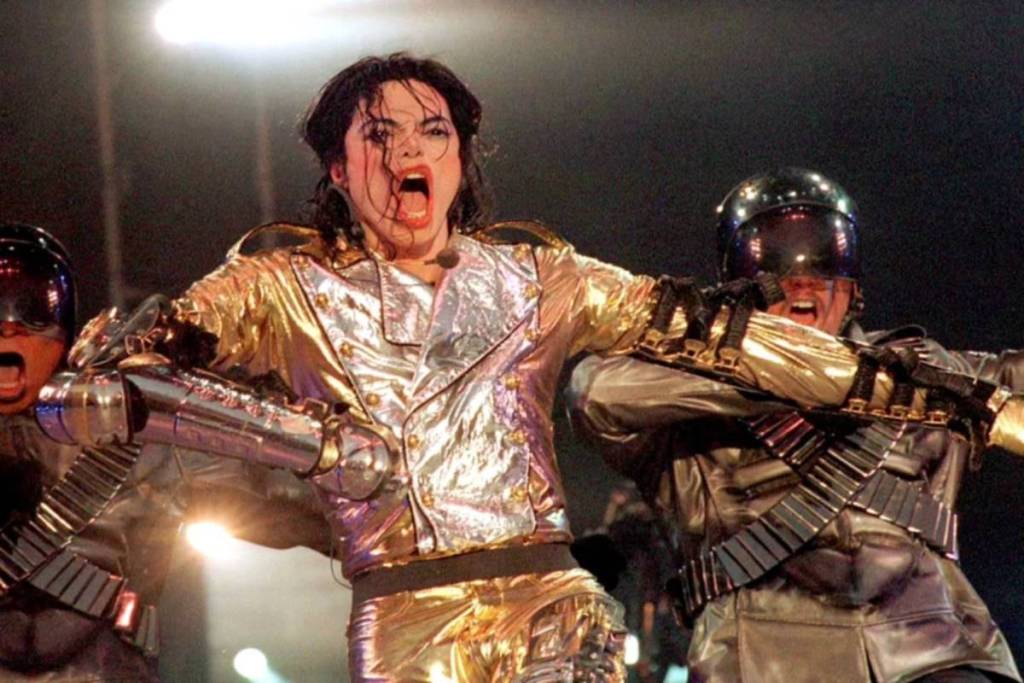

Michael Jackson didn’t just make global headlines in Berlin in 2002 when he held his young son over the balcony railing of the luxury Adlon Hotel. Fourteen years earlier, the King of Pop had already sent the capital into a frenzy—though for a completely different reason. On June 19, 1988, he performed in front of the Reichstag building in West Berlin, just a few meters from the Berlin Wall. While the Stasi feared a political escalation, the GDR tried to keep young people on the eastern side away from the border by organizing its own concert featuring Canadian rock star Bryan Adams.

On June 19, 1988, about a year and a half before the fall of the Berlin Wall, Michael Jackson made music history in Berlin. As part of his “Bad World Tour,” the King of Pop performed in front of nearly 50,000 enthusiastic fans at Platz der Republik in West Berlin. While fans in front of the Reichstag building celebrated his greatest hits, such as “Thriller,” “Billie Jean,” and “Beat It,” a tense situation was unfolding on the other side of the Berlin Wall. Thousands of East German citizens wanted to hear the global superstar—at least from a distance—and gathered near the Brandenburg Gate. The Stasi feared political protests and mobilized numerous security forces to keep the crowds under control. Even West German television crews found themselves in the Stasi’s crosshairs.
The GDR leadership’s reaction to the concert was particularly extraordinary. To keep as many young people as possible away from the Brandenburg Gate, it organized a large counter-concert featuring Bryan Adams and Heinz Rudolf Kunze in East Berlin that same evening. Historical Stasi documents, now accessible at the Federal Archives, reveal just how great the nervousness within the GDR regime actually was.

In the summer of 1988, Berlin was still in the midst of the Cold War. For nearly 27 years, the Berlin Wall had divided the city into East and West. While West Berlin had developed into an international hub for music, art, and alternative culture, the GDR leadership continued to try to control Western influences on its population. But the music of international superstars, in particular, could not be stopped by a wall. Michael Jackson’s concert took place on Republic Square, directly in front of the Reichstag building, just a few hundred meters from the inner-German border. Weeks before the performance, the Stasi already knew that numerous young people from East Berlin would try to listen to the music near the Brandenburg Gate.
In fact, the concert in Weißensee drew nearly 100,000 people, attracting roughly twice as many attendees as Michael Jackson’s performance on the western side. Nevertheless, the GDR authorities were unable to keep all fans away from the Brandenburg Gate. Between 3,000 and 5,000 people gathered there to at least hear the King of Pop’s music from a distance.