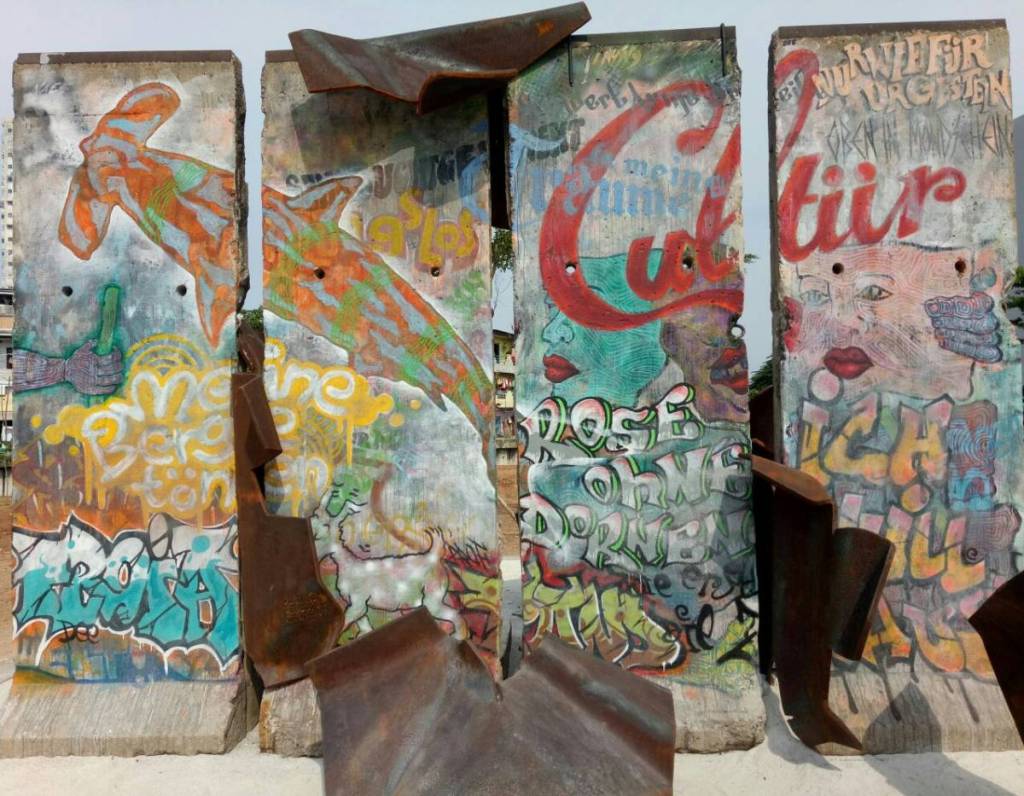

When the Berlin Wallfell on November 9, 1989, it not only ended decades of German division but also marked the beginning of the remarkable journey of one of the 20th century’s most iconic structures. The once-impenetrable, L-shaped reinforced concrete elementsof the so-called “Border Wall 75” were transformed from symbols of oppression into coveted monuments to freedom.
From a Deadly Border Wall to a Global Best-Seller

As early as 1990, the GDR government began systematically dismantling the monstrous border system. To secure urgently needed foreign currency, the state-run import-export company LIMO was commissioned to dispose of the concrete fragments. What once served to confine people was now sold at auctions in Monaco, Berlin, and around the world. In the decades that followed, the city of Berlin also presented numerous segments as official diplomatic gifts to foreign partners.
From Asia to the Vatican—the Berlin Wall is everywhere
Today, an estimated 2,000 original concrete segments of the Berlin Wall are located at more than 500 sites in over 60 countries worldwide. They can be found on nearly every continent, placed in public parks, in front of government buildings, at universities, and in museums. One segment, for example, stands in the Vatican Gardens, where it bears a painting of St. Michael’s Church in Berlin. In South Korea, several concrete segments were installed in “Berlin Park” in Seoul to keep alive the hope for a future reunification of the Korean Peninsula.
Prominent Relics in the U.S. and Jamaica
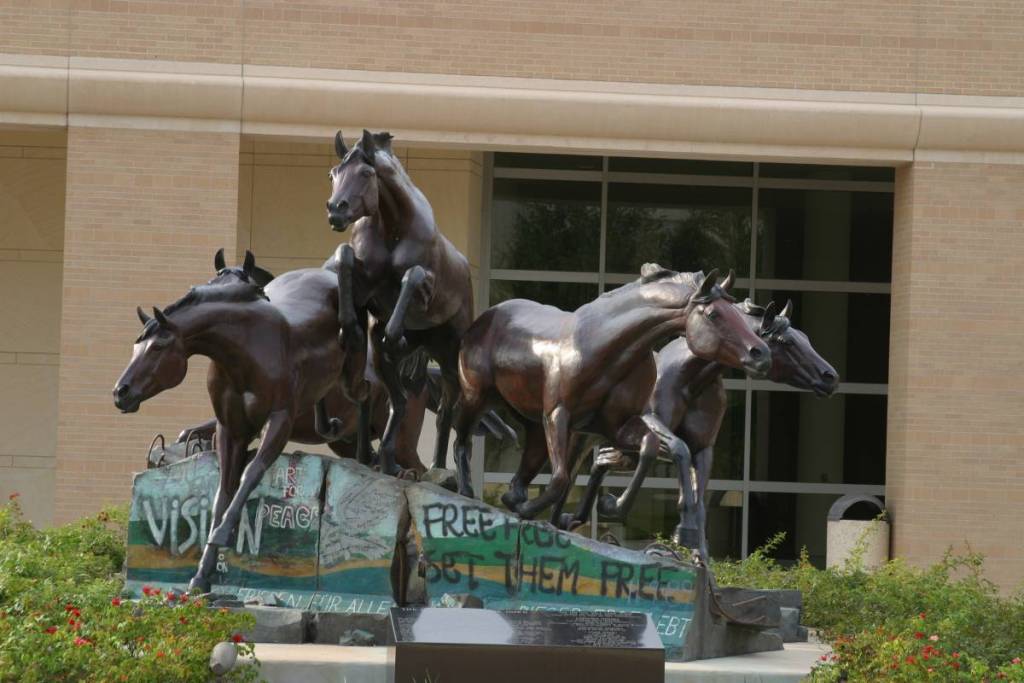
There is also an enormous concentration of these historical relics in the U.S. Over a hundred segments are scattered across the American continent—including in front of the CIA headquarters in Langley and in various presidential libraries, such as that of Ronald Reagan. Traces can even be found in tropical regions. In Jamaica, a colorfully painted section of the Wall stands near a military museum in Kingston; it was given to sprint legend Usain Bolt after he set world records at the 2009 World Championships in Athletics in Berlin.
This worldwide distribution has transformed the once-gray, deadly concrete colossi into global ambassadors. They remind people all over the world that borders can be overcome and that the desire for freedom is stronger than any concrete wall.
Location: Public parks, museums, and squares worldwide (e.g., Seoul, Kingston, Langley, Vatican City)
Date and Time: Open year-round, 24 hours a day (depending on location)
Duration: Approx. 30 to 60 minutes
Cost: Usually free (in public spaces)
Website: berlin.de/mauer