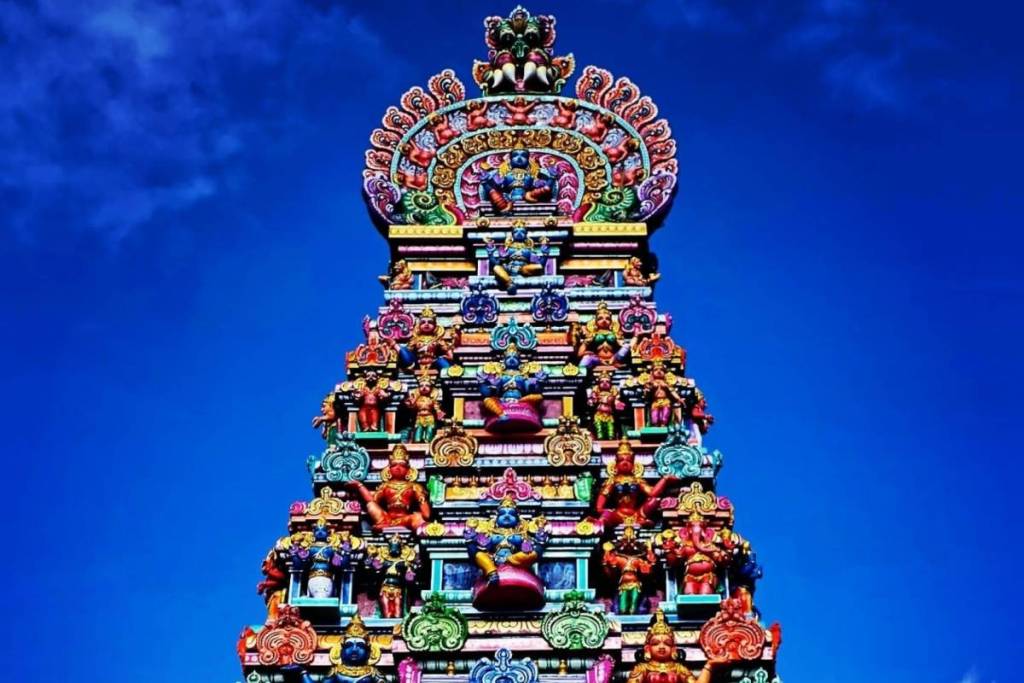

Berlin is constantly changing—and almost every day there are new places, exciting additions, and surprising developments to discover. Whether it’s New Yorker and an XXL REWE opening at the Mall of Berlin or an adults-only boutique hotel in a former women’s prison: The capital remains diverse, unpredictable, and always full of surprises. And this summer brought another special addition: Since June 2026, Neukölln has been home to the Sri Ganesha Hindu Temple Berlin— a Hindu temple located at Hasenheide 106, which, with its imposing architecture and South Indian Dravidian style , is a truly special landmark in the city.
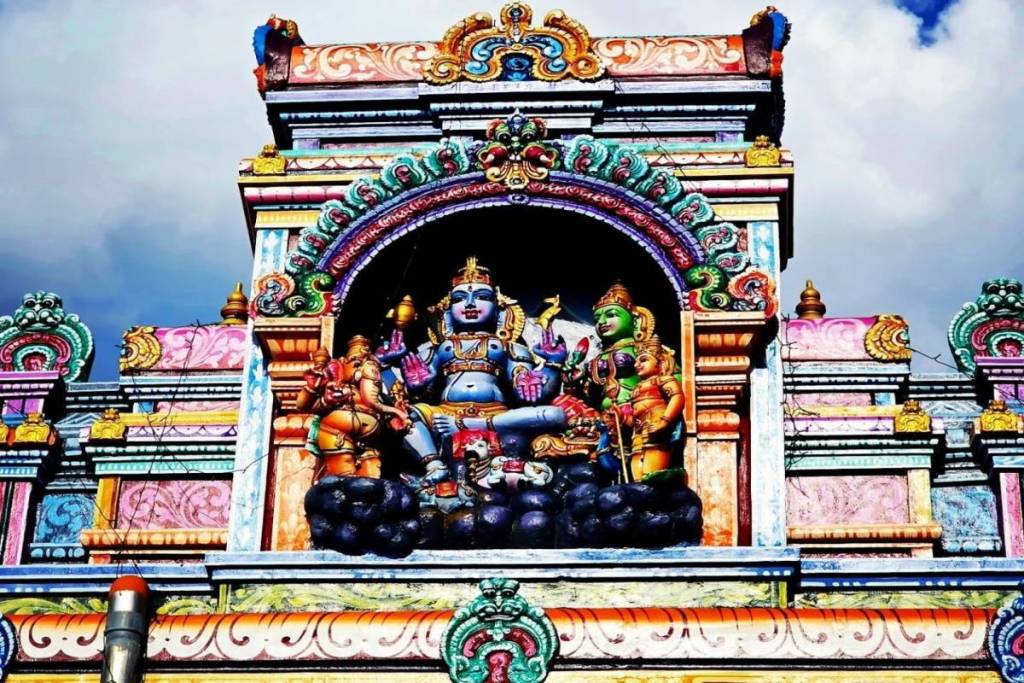
It is dedicated to Ganesha— the Hindu deity with an elephant’s head, who is associated, among other things, with wisdom, good fortune, and the overcoming of obstacles. What makes it special is the architecture: it is a temple in the South Indian Dravidian style. Particularly striking is the approximately 17-meter-tall tower, known as a vimana or, in the project descriptions, as a raja-gopuram, which is richly decorated with golden elements. The facade is a deep blue and features traditional ornamentation.
This is no mere decorative style. The Dravidian style originates in South India and is particularly associated with the grand Hindu temples of Tamil Nadu and other South Indian regions. According to the association, the Berlin temple was designed with the support of a sthapati firm from Mahabalipuram. Mahabalipuram is a historic temple and art center in Tamil Nadu, known for its stone temple complexes and sculptural art. One particularly interesting detail: Granite murtis—that is, sacred representations of Hindu deities— were brought from South India to Berlin for the temple. The central Ganesha figure was carved from black granite in South India and then transported to Berlin.
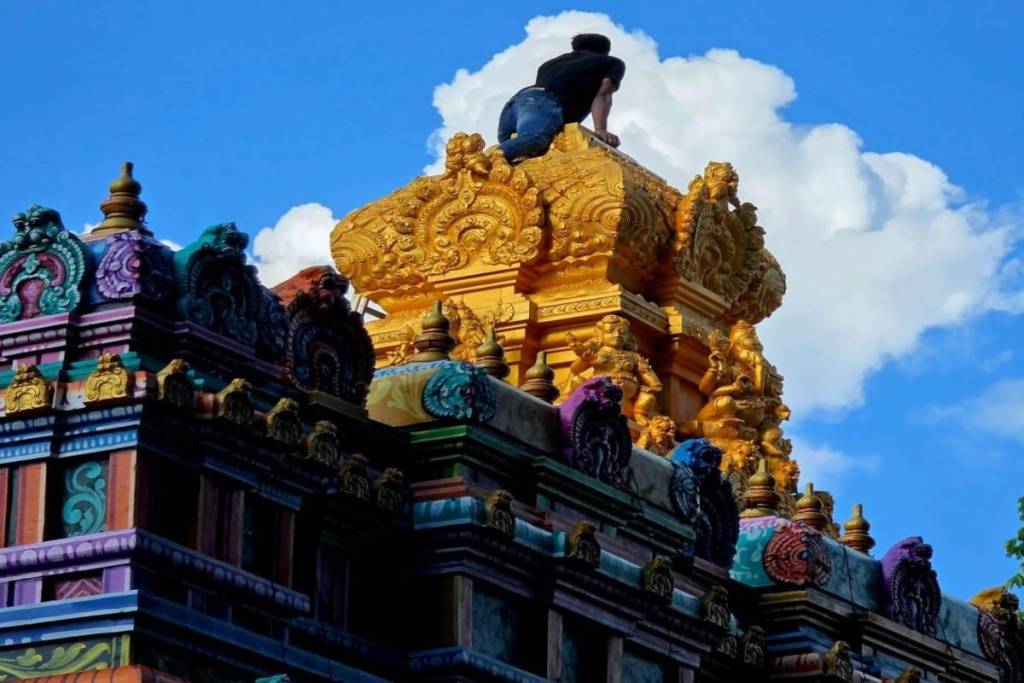
The temple is not a sudden attraction that appeared in 2026. Rather, there is a history spanning over 20 years behind its construction: the sponsoring association was founded as early as September 24, 2005. This means nearly 21 years passed between the association’s founding and the temple’s inauguration in June 2026. The project’s financing is also noteworthy. According to the temple association, the total cost amounted to approximately 1.1 million euros. The construction was reportedly financed entirely through donations and so-called sevā—that is, voluntary and selfless service within the community.
The grand opening wasn’t limited to a single day. From June 3 to 7, 2026, the congregation held a multi-day ceremony. The highlight was the Maha Kumbhabhishekam on June 7, the traditional grand consecration ceremony of a Hindu temple.
Daily religious life at the temple includes, among other things, Aarti, a Hindu light ritual, as well as prayers and mantras. In addition, bhajans—devotional songs—are sung, and various puja ceremonies are performed. Religious holidays and traditional Hindu rites of passage are also part of the program.