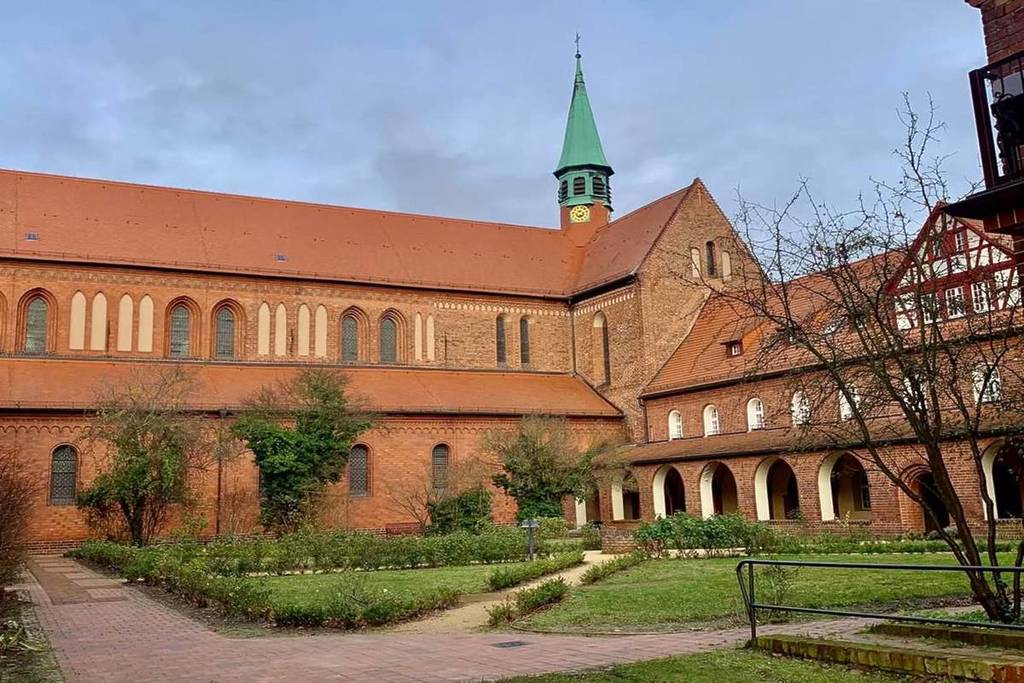

Brandenburg’s monasteries and castles are known for taking visitors on a journey through time. They impress not only with their imposing architecture but also with their ornate interiors and picturesque surroundings. Amid impressive brick buildings, venerable monastery complexes, and medieval fortresses, the state’s history reveals itself from its most beautiful side. In addition to Chorin Monastery and Neuzelle Monastery, we would therefore like to introduce you to Lehnin Monastery—one of Brandenburg’s most significant historical structures.
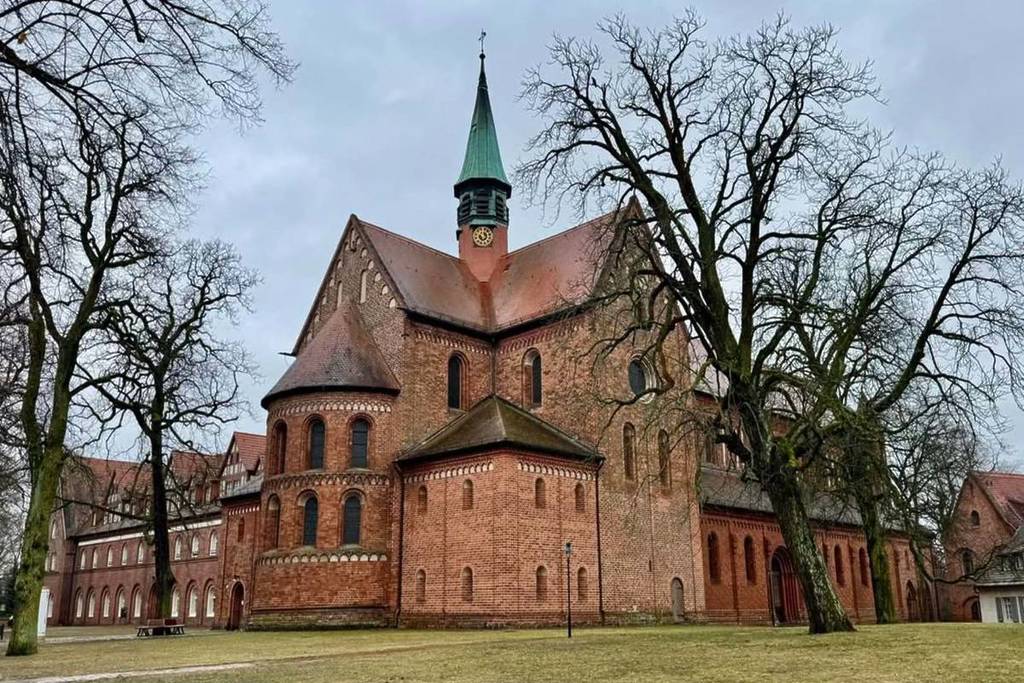
Founded in 1180, the monastery is considered the oldest in the Margraviate of Brandenburg and played a decisive role in the region’s development during the Middle Ages. The abbey was founded by Margrave Otto I, the son of Albrecht the Bear, who is regarded as the founder of the Margraviate of Brandenburg. By founding the monastery, Otto I created not only a religious center but also a key driver for the settlement and economic development of the then-young Mark Brandenburg. Just four years after its founding, Otto I himself was buried here. The monastery subsequently served as the family monastery and burial site of the Ascanian dynasty— Brandenburg’s first ruling dynasty.
Over the centuries, Lehnin developed into one of the most influential monasteries in northeastern Germany. The Cistercian monks engaged in agriculture, promoted the settlement of the region, and founded additional monasteries. Throughout its history, the monastery owned numerous villages and estates and developed into a major economic and cultural center of Brandenburg.
Architecturally, the complex is also one of Brandenburg’s most significant landmarks. The monastery church of St. Mary is considered one of the most important examples of early Brick Gothic and the transition from the Romanesque to the Gothic period in Brandenburg. After secularization in 1542, the complex fell into partial disrepair before undergoing extensive restoration between 1871 and 1877—a project that is now regarded as an early masterpiece of modern historic preservation.
The monastery’s location is particularly idyllic. The complex is situated in the heart of the Zauche region’s forested and water-rich landscape and lies just about 700 meters from Klostersee. The lake covers an area of around 38 hectares and is surrounded by forests, hiking trails, and swimming spots . This makes a visit to the monastery the perfect opportunity to combine a walk or an outing in nature.
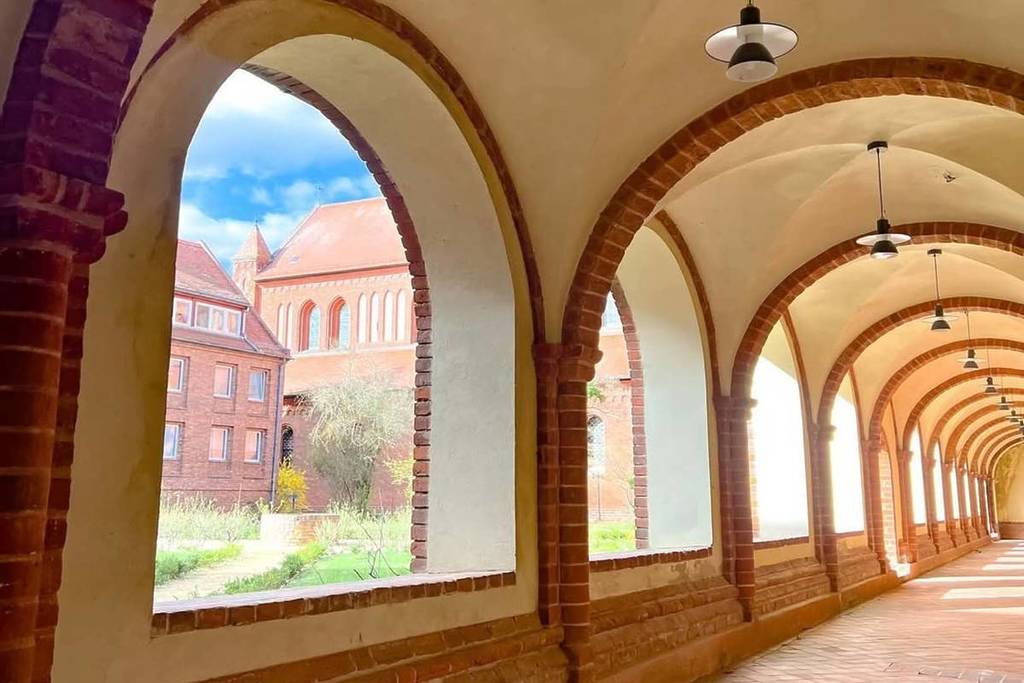
Today, the Cistercian Monastery of Lehnin is one of the best-preserved monastery complexes in Brandenburg. In addition to the imposing church, visitors can explore the historic cloister, former farm buildings, and a museum dedicated to the history of the Cistercians. The nearly completely preserved complex still conveys a unique impression of the monks’ lives in the Middle Ages.